
Symptoms, Stages and Treatment
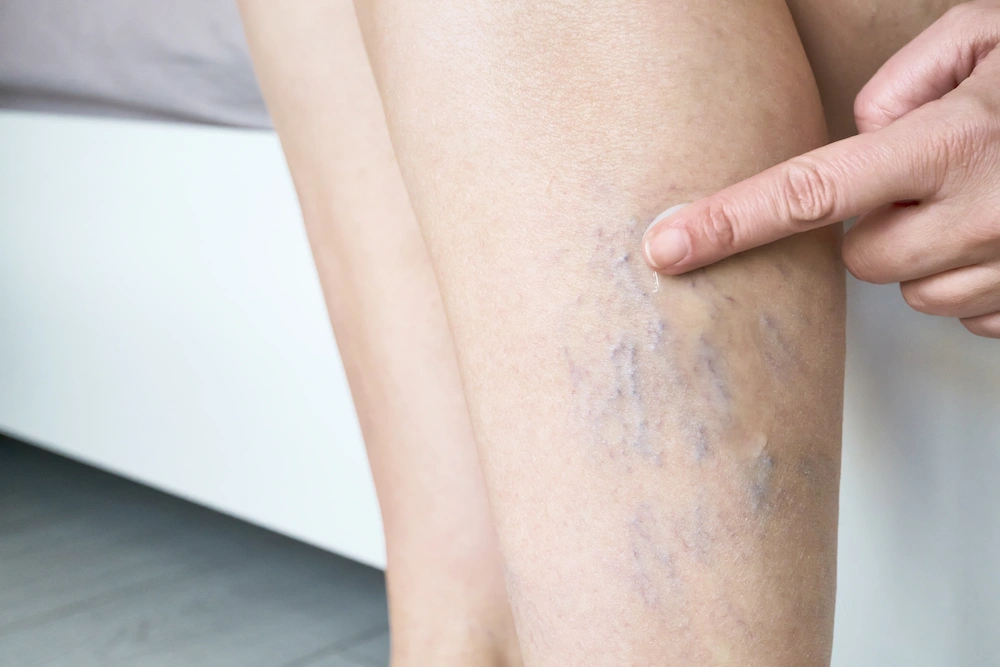

Table of Contents
Overview:
Spider veins are small, widened blood vessels just under the skin that appear as fine red, purple or blue lines, often in a web or branching pattern.
Doctors call them telangiectasia. Other common names are thread veins and broken capillaries. Each vessel is usually less than 1 mm wide, which places spider veins in class C1 of the CEAP classification that vascular surgeons use to grade vein disease, last updated in 2020. Spider veins lie flat in the skin. They do not bulge like varicose veins.
On the legs, spider veins most often appear on the thighs, behind the knees, on the calves and around the ankles. They can look less obvious on darker skin, where the red and blue colours are harder to see.
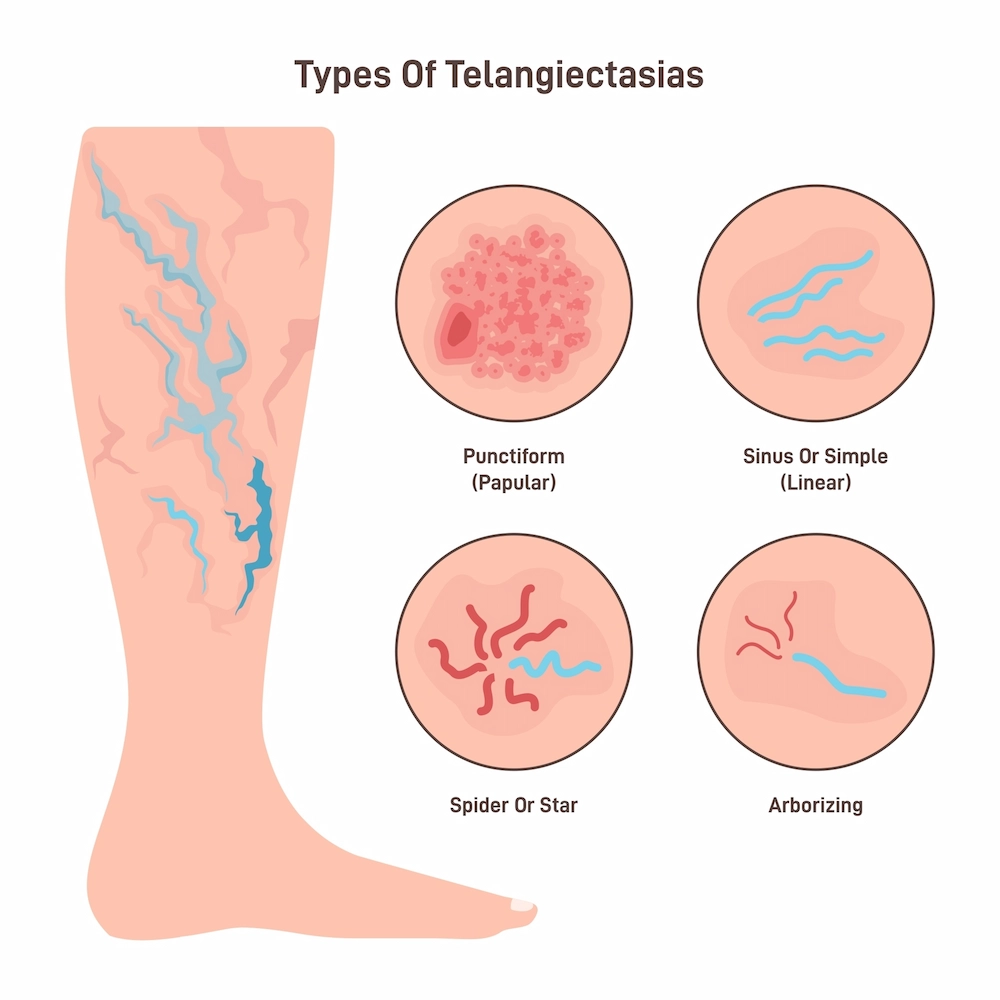
Common patterns include:
Spider veins belong to a wider group of vein problems. Our page for venous disease diagnosis and treatment covers the full range, from spider veins to varicose veins and leg ulcers.

Dr Tay Jia Sheng is a distinguished vascular surgeon in Singapore, specialising in minimally invasive vascular, endovascular and endovenous procedures. He treats a broad range of conditions including varicose veins, deep vein thrombosis, peripheral arterial disease, diabetic foot ulcers and aortic aneurysms.
As a founding vascular surgeon at Sengkang General Hospital, Dr Tay led one of Singapore’s busiest vascular units with strong outcomes and low complication rates. He is among the few local surgeons skilled in advanced techniques such as minimally invasive vein harvesting and complex endovascular aneurysm repairs.
Outside the operating theatre, he has taught at Yong Loo Lin, Duke-NUS and Lee Kong Chian medical schools. Recognised with awards such as the SingHealth Quality Service Award and COVID-19 Resilience Medal, he now practises at Spectrum Vascular & General Surgery, offering patient-centred care with a focus on minimally invasive treatment.
Spider veins are less than 1 mm wide and lie flat in the skin, while varicose veins are 3 mm or wider, bulge above the skin and usually come from leaking valves in larger veins.
A third group sits between the two. Reticular veins are blue or green veins 1 to 3 mm wide that often show behind the knee or on the outer thigh. They can feed nearby clusters of spider veins. The table below sets out the main differences.
| Feature | Spider veins | Reticular veins | Varicose veins |
|---|---|---|---|
| Size | Less than 1 mm | 1 to 3 mm | 3 mm or wider |
| Look | Fine red, purple or blue lines, flat | Blue or green veins, flat or slightly raised | Twisted, bulging blue or purple veins |
| Usual symptoms | Often none | Often none | Aching, heaviness, swelling |
| CEAP class | C1 | C1 | C2 |
| Usual cause | Weak small vessels, hormones, sometimes reflux | Raised pressure in surface veins | Leaking valves in larger veins |
Spider veins do not turn into varicose veins. The two often appear together, because they share risk factors such as age, pregnancy and family history. When both are present, the larger veins are assessed first. We have a page for varicose vein treatment that explains how larger veins are treated.
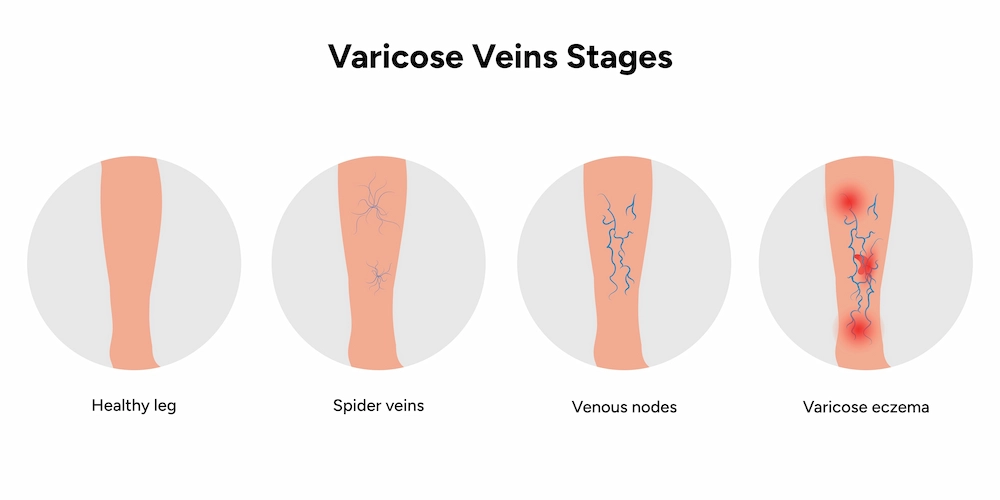
Spider veins form when the walls of tiny blood vessels near the skin weaken and widen. The exact trigger is often unclear.
Cleveland Clinic lists hormonal changes, family history and pressure in the leg veins among the main contributors. In some people, spider veins are a surface sign of venous reflux. In reflux, faulty valves in deeper veins let blood flow backwards and raise the pressure in the smaller vessels near the skin.
Recognised risk factors include:
Work that keeps you on your feet for long hours, such as retail, food and beverage service and nursing, adds strain on the leg veins over the years.
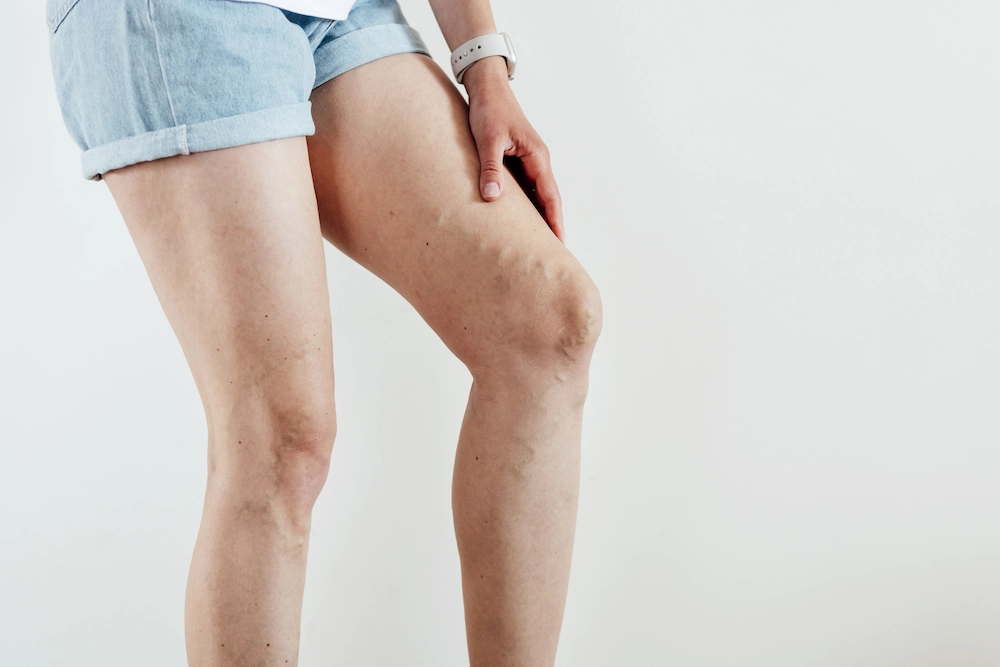
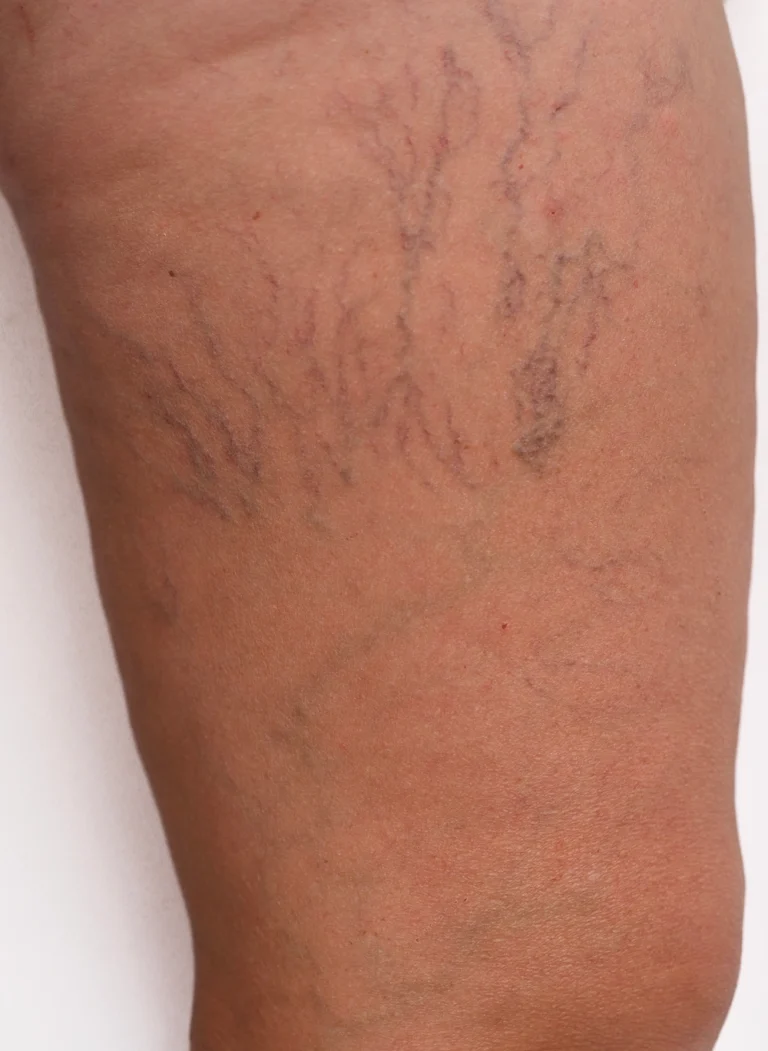
Spider veins are usually a cosmetic concern. They need a vein assessment when they come with aching, heaviness, swelling or skin changes, because these can be signs of venous reflux.
According to the Cleveland Clinic, spider veins can be an early sign of chronic venous insufficiency, a long term condition in which the leg veins struggle to return blood to the heart. Page for chronic venous insufficiency explains its stages and treatment.
Signs that your spider veins need an assessment:
Ankle flare (corona phlebectatica) is graded as a sign of more advanced vein disease, CEAP class C4c, rather than as simple spider veins. It is worth having checked.
A vascular surgeon assesses spider veins with a medical history, an examination of both legs and, when needed, a duplex ultrasound scan to check for reflux in the deeper veins.
A vein assessment usually includes these steps:
Not everyone with spider veins needs a scan. A scan is usually advised when there are symptoms, visible reticular or varicose veins feeding the spider veins, ankle flare, or spider veins that came back soon after earlier treatment.
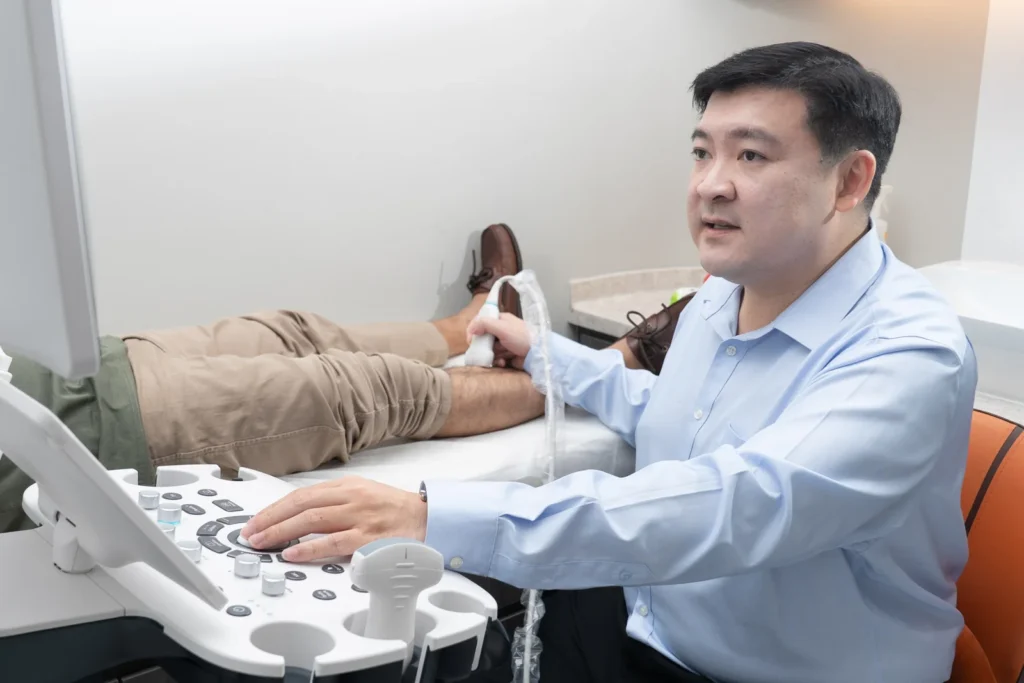
The main treatment for spider veins on the legs is sclerotherapy, an injection that closes the small veins so they fade. When the scan shows reflux, the faulty larger veins are treated first.
Spider veins do not always need treatment. Many people choose treatment because of how the veins look, or because they ache or itch. The right option depends on the size of the veins, whether reflux is present and your skin type.
| Option | What it does | Often used for |
|---|---|---|
| Sclerotherapy | Closes the vein with an injected medicine | Spider veins and reticular veins on the legs |
| Treatment of reflux | Closes a faulty larger vein from the inside | Reflux shown on the duplex scan |
| Compression and self care | Supports blood flow and recovery | Symptom relief and recovery after sclerotherapy |
| Surface laser (if offered) | Heats and closes very fine vessels through the skin | Very fine veins too small to inject |
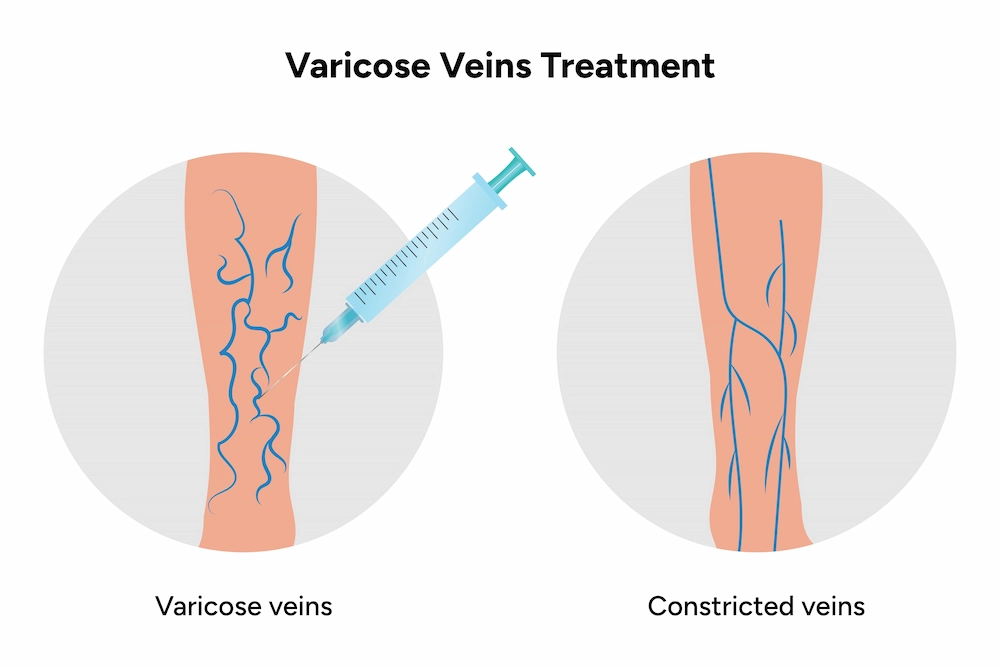
Sclerotherapy treats spider veins by injecting a medicine called a sclerosant into the vein through a very fine needle. The medicine irritates the vein lining so the vein closes, and the body absorbs it over the following weeks.
One session can treat many small veins. Larger areas often need several sessions, spaced some weeks apart. Cleveland Clinic notes that treated spider veins typically fade within three to six weeks. Sclerotherapy for spider veins is done in the clinic and does not need a general anaesthetic.
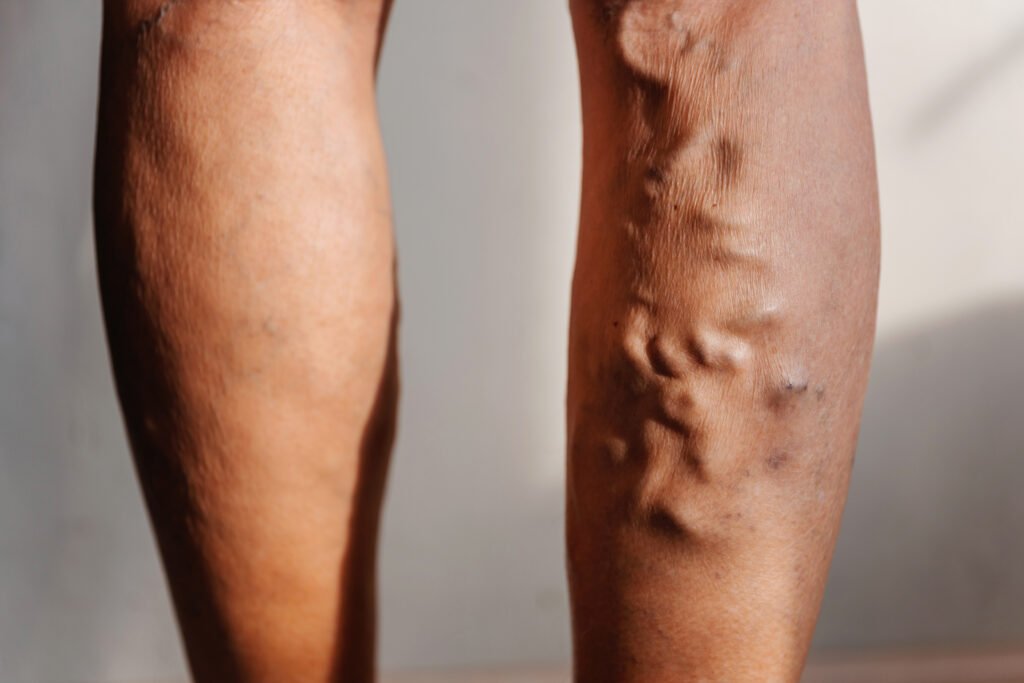
If the duplex scan shows reflux in a larger vein, that vein is treated before the spider veins. Untreated reflux keeps the pressure high, and new spider veins can keep appearing.
The faulty vein is usually closed from the inside with a minimally invasive procedure such as endovenous thermal ablation, VenaSeal or ClariVein. Our page on varicose vein treatment options explains how each one works.
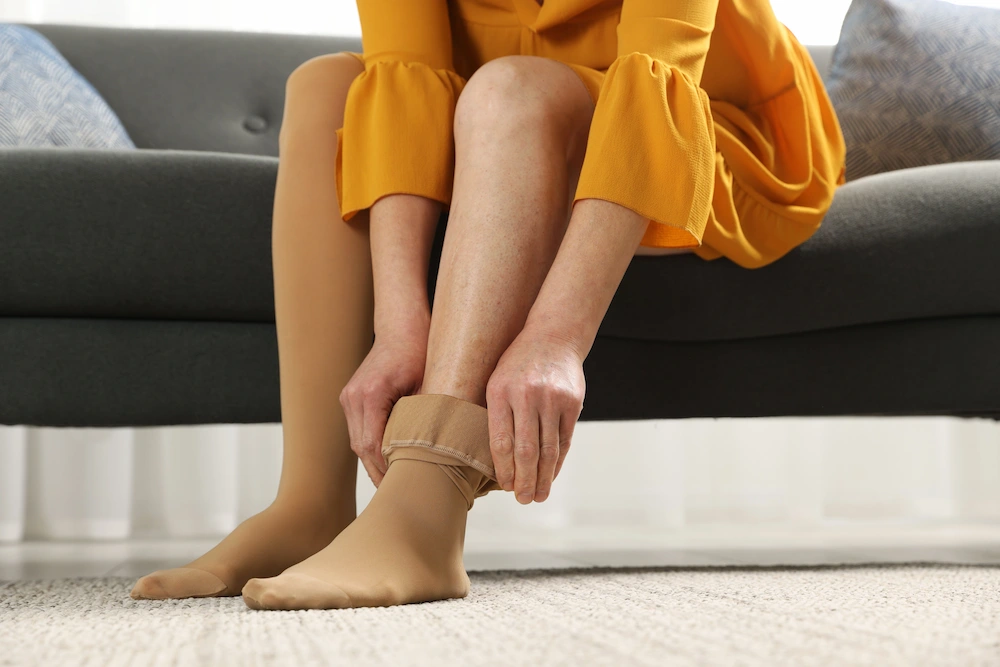
Compression stockings and daily habits ease aching and support recovery after sclerotherapy, but they do not remove spider veins.
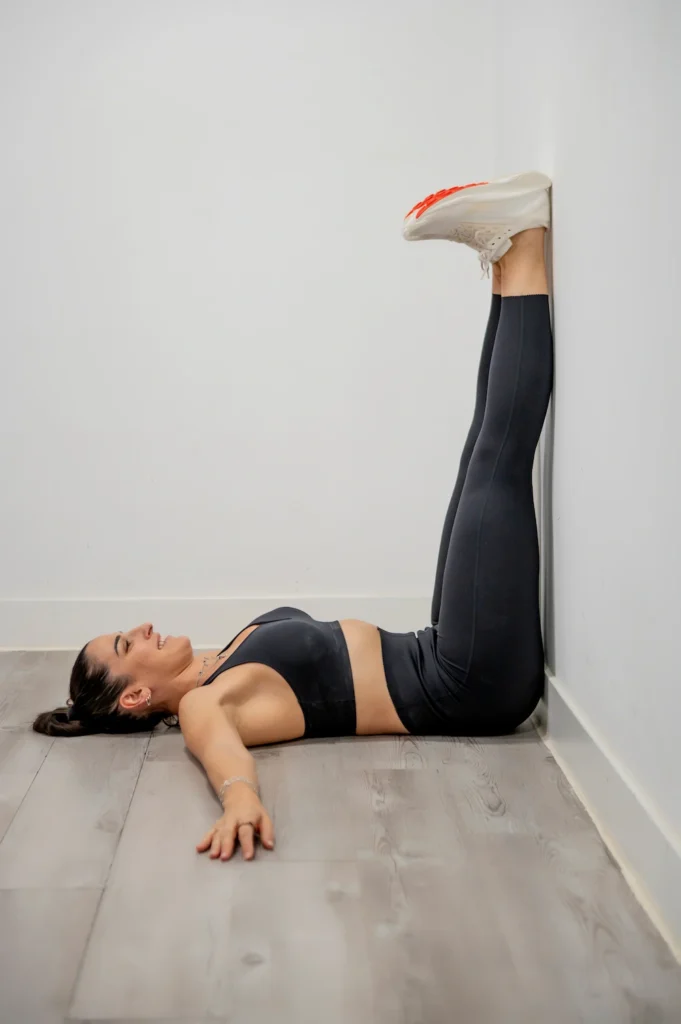
Graduated compression stockings squeeze the leg most at the ankle, which helps push blood upwards. Dr Tay Jia Sheng may advise wearing them for a period after each sclerotherapy session. Regular walking, breaks from long periods of sitting or standing and raising your legs also help. You can read about the types and fitting of compression stockings in Singapore.
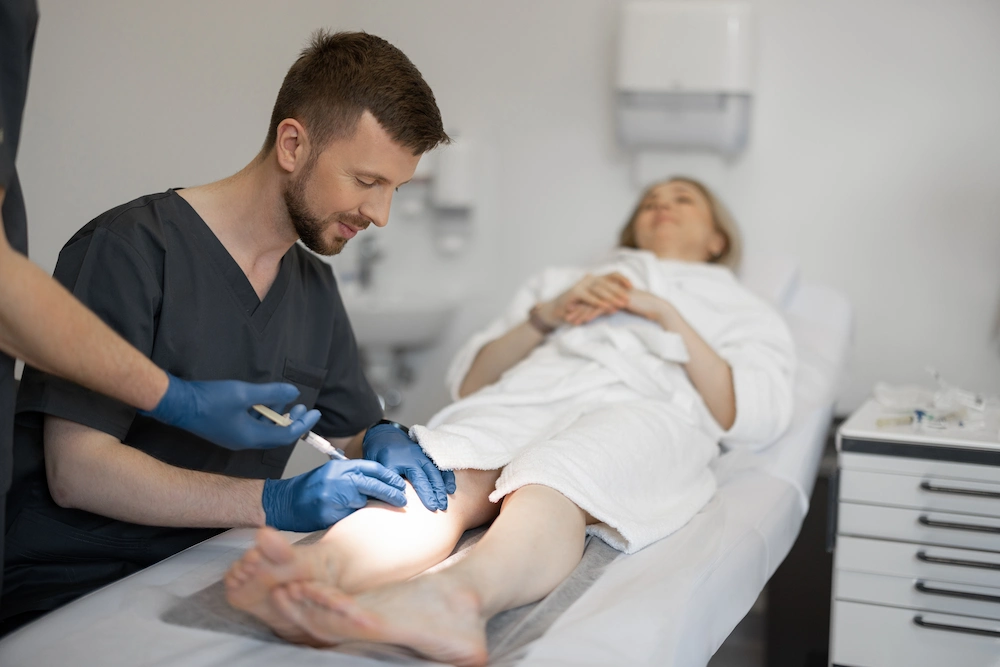
Sclerotherapy for spider veins takes place in the clinic, and you can walk and go home straight afterwards.
A typical session follows these steps:

you lie on the treatment couch and the skin over the veins is cleaned.
Dr Tay Jia Sheng injects the sclerosant into the spider veins through a very fine needle. Most people feel small pricks or brief stinging.
cotton pads or a compression stocking may be placed over the treated area.
you get up and walk soon after the injections to keep blood moving in the legs.

a follow up visit checks the result and plans any further session.
Most people go back to their usual daily activities soon after sclerotherapy, and treated spider veins fade gradually over the following weeks.
Common, short lived effects include:
Dr Tay Jia Sheng will give you advice on compression, exercise and sun protection after each session.
Contact the clinic if you notice:
Treated spider veins usually stay closed, but new spider veins can form over time, so some people choose further treatment in later years.
New veins are more likely when the underlying cause continues, such as a family history, hormonal changes or reflux that has not been treated.
Ways to lower the chance of new spider veins:
The cost of spider vein treatment in Singapore depends on the number of veins treated, the number of sclerotherapy sessions and whether a duplex scan or treatment of underlying reflux is needed.
The Ministry of Health (MOH) publishes fee benchmarks for procedures in its Table of Surgical Procedures (TOSP). Injection of spider veins is listed under TOSP codes SD707V and SD728V as a minor surgical procedure. MOH classes minor surgical procedures as not claimable, so there is no MOH fee benchmark for spider vein sclerotherapy, and it cannot be paid with MediSave or MediShield Life.
When the assessment finds reflux or bleeding veins that need treatment, other TOSP codes with MOH fee benchmarks apply. The figures below come from MOH bill information.
MOH Benchmark Surgeon’s Fees and Typical Bills
| Procedure | TOSP code | Surgeon's fee (MOH benchmark, with GST) | Typical total bill, private clinics |
|---|---|---|---|
| Spider veins, injection, fewer than 3 hand sized areas | SD707V | No benchmark (minor surgical procedure) | Not published by MOH |
| Spider veins, injection, 3 or more hand sized areas | SD728V | No benchmark (minor surgical procedure) | Not published by MOH |
| Image guided sclerotherapy for bleeding varicose veins or vascular malformation | SD717V | S$2,071 to S$4,687 | S$4,971 (S$4,585 to S$5,207) |
| Endovenous laser treatment of varicose veins, 1 leg | SD713V | S$5,341 to S$7,957 | S$13,831 (S$12,670 to S$14,135) |
Surgeon’s fees are MOH benchmarks for private hospitals and clinics. They are a reference range for a routine, typical case and not a fee cap. Typical totals are the median bill for Singapore Citizens in private clinics, with the 25th to 75th percentile in brackets, based on bills from 1 January to 31 December 2023. Bills include GST and are shown before insurance and MediSave. Source: MOH bill information for SD717V and SD713V, and the MOH Table of Surgical Procedures (1 January 2024).
Other costs to plan for include:
Treatment of symptomatic venous disease, such as reflux, may be claimable under the relevant TOSP code, subject to MOH withdrawal limits and your insurer’s terms. Our clinic team can give you a cost estimate after your assessment. For larger veins, see our blog for varicose vein treatment cost in Singapore.

Book an assessment with Dr Tay Jia Sheng if spider veins on your legs bother you, ache or come with swelling or skin changes.
Dr Tay Jia Sheng is a Senior Consultant Vascular & Endovascular Surgeon with a special interest in minimally invasive endovenous surgery. He was the founding surgeon of the Vascular and Endovascular Service at Sengkang General Hospital. He sees patients at Mount Elizabeth Novena Specialist Centre and Farrer Park Hospital Medical Centre.
No cream or home remedy has been shown to close spider veins. Walking, raising your legs and compression can ease aching and help prevent new veins.
Most people feel only small pricks and brief stinging from the fine needle. No general anaesthetic is needed.
Treatment is usually postponed until after pregnancy and breastfeeding. Dr Tay Jia Sheng can review your veins once you have finished breastfeeding.
Walking is encouraged straight after treatment. Dr Tay Jia Sheng will advise when you can return to more strenuous exercise.
Spider veins usually stay once they form, and new ones can appear over time.
For enquiries, consultation or second opinions, please complete the form below or call us at +65 8874 0371
Our team will get back to you shortly to assist with your request.

38 Irrawaddy Road
#10-33
Singapore 329563
Tel: +65 6041 0933
1 Farrer Park Station Road
#08-14 Connexion
Singapore 217562
Tel: +65 6974 8859
HP: +65 8874 0371 (24 hours)
Email: co*****@**************ry.com
© 2026 Spectrum Vascular & General Surgery