
Written by
Medical Director, Senior Consultant Vascular & Endovascular Surgeon
Last Updated: September 9, 2026
When most people hear “compression socks”, they probably think of varicose veins, swollen legs or long-haul flights. But compression socks aren’t exclusively for people with vein problems.
Even if you don’t have varicose veins, your legs may feel heavy at times, especially after a long day of standing. This is where compression socks can help.
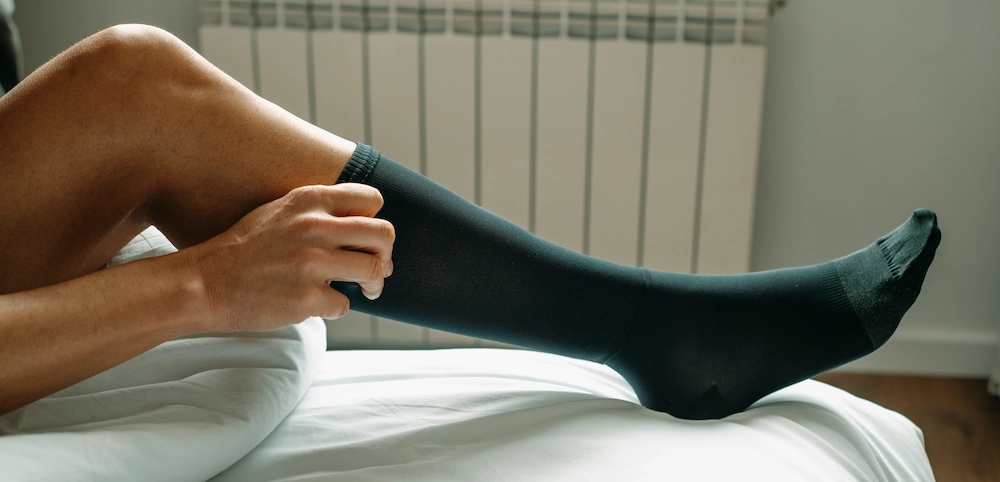
Compression socks are specially designed to support healthy blood circulation in your legs by applying gentle pressure. They help reduce pressure on the veins, limit fluid build-up that can cause swelling, and support the calf muscle pump in moving blood back towards the heart.
Most medical compression socks use graduated compression, meaning they are tightest around the ankle and gradually become looser further up the leg.
Compression socks are often an integral part of a varicose vein treatment plan because they help patients manage the day-to-day effects of poor venous circulation while their treatment takes effect. They can reduce swelling, heaviness and aching while a treatment or wait-and-monitor approach runs its course, and provide support during recovery after procedures such as sclerotherapy or vein ablation.
More importantly, compression socks complement the overall treatment plan by giving patients a non-invasive way to support circulation and manage symptoms between clinic visits.
While compression socks cannot reverse existing varicose veins or treat the underlying faulty veins, they can help slow the progression of symptoms in earlier-stage disease and support recovery after treatment.
Yes, for most healthy people, wearing compression socks is a reasonable preventive habit, especially if your day involves a lot of standing, sitting, or time in heels.
Compression socks are commonly used by:
Yes, compression socks can generally be worn every day if they are properly fitted and appropriate for you. For everyday preventive use, most people wear them during the hours when they are most active or upright, such as when working, commuting or travelling, and remove them at night.
For healthy individuals using compression socks for general leg support, a lower compression level of around 15-20 mmHg is usually more appropriate than the higher levels used for diagnosed vein conditions. The socks should feel snug and supportive, but never painfully tight, numb or uncomfortable.
If you’re using compression socks as part of a treatment plan, follow your doctor’s specific guidance as guidelines may differ.
Yes. Lower-compression socks are widely available over the counter and can be purchased from pharmacies and retailers such as Watsons, Guardian and Decathlon, as well as online.
The most important thing is getting a properly fitted pair with the right level of compression, and get those with graduated compression rather than uniform pressure. An ill-fitting or overly tight pair can cause discomfort, skin irritation and, in some cases, restrict blood flow.
If you’re buying compression socks for the first time, Dr Tay highly recommends speaking to a vein specialist first. Vein specialists can recommend the appropriate compression level and fit, as well as advise you on how and when to wear them so you can get the most benefit from them.

Not sure which compression level or fit is right for you, or whether your leg swelling is something more than a long day on your feet? Drop Dr Tay Jia Sheng a message at Spectrum Vascular & General Surgery. He’s happy to help you find the right compression socks for your needs, or advise if your symptoms are worth taking a closer look at.
38 Irrawaddy Road
#10-33
Singapore 329563
Tel: +65 6041 0933
1 Farrer Park Station Road
#08-14 Connexion
Singapore 217562
Tel: +65 6974 8859
HP: +65 8874 0371 (24 hours)
Email: co*****@**************ry.com
© 2026 Spectrum Vascular & General Surgery