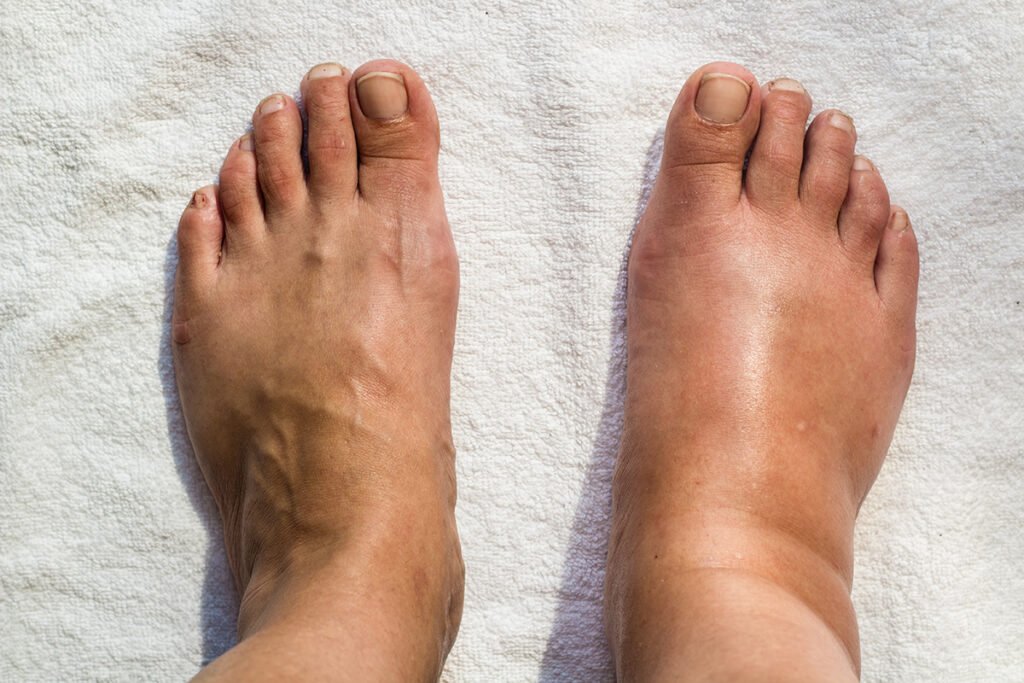
It is common to experience swollen legs after a long day, but swelling that persists or keeps returning may signal more than simple fatigue. In some individuals, leg swelling may be related to problems with the veins or arteries, where blood flow is not functioning as efficiently as it should.
Swollen legs occur when excess fluid builds up in the tissues of the lower limbs:
This can lead to puffiness, tightness, or a feeling of heaviness, most commonly affecting the ankles, feet, or calves. One often overlooked sign is skin that appears stretched or shiny, which may indicate fluid retention beneath the skin.
While occasional mild swelling can be normal, particularly after prolonged standing or sitting, ongoing or worsening leg swelling is more likely to be associated with an underlying medical condition and should be assessed.
Leg swelling can result from a range of conditions that affect how fluid circulates and drains from the lower limbs. Common causes include vascular, lymphatic and other medical factors:
Healthy circulation allows blood and fluid to move efficiently back towards the heart:
When vascular conditions affect the veins or arteries, circulation may slow or become impaired, increasing pressure in the leg vessels and contributing to persistent leg swelling.
Some individuals are more likely to experience swollen legs or worsening leg swelling due to factors that place additional strain on the circulation.
You may be more prone if you have:
Leg swelling becomes concerning when it persists for several days without improvement or continues to worsen. It may also require further assessment if accompanied by pain, heaviness or visible skin changes.
Swelling that affects one leg more than the other, appears suddenly, or becomes severe should not be ignored. If leg swelling is associated with shortness of breath, this may indicate a medical emergency and requires immediate medical attention.
A GP can provide an initial assessment and help rule out common causes of swollen legs. When leg swelling is suspected to be related to the veins or arteries, a vascular surgeon offers a more specialised evaluation.
Vascular surgeons are trained to assess circulation in detail and recommend targeted treatment that addresses the underlying cause, rather than symptoms alone.
Early assessment by a vascular specialist can help prevent delays in care and reduce the risk of complications such as blood clots, chronic leg ulcers or infection.
During your consultation, your doctor will carry out a detailed evaluation, which may include:
Depending on the underlying cause, treatment options are broadly categorised as follows:
| Non-invasive management | Compression stockings to improve blood flow, making a constant effort to elevate your legs, maintaining a healthy weight, reducing prolonged standing and sitting and medication. |
| Minimally invasive procedures (if swelling is linked to vein or artery problems) | Endovenous ablation – using heat to seal faulty veins
Angioplasty – opening narrowed arteries with a balloon Sclerotherapy – injecting a solution to close varicose veins |
| Surgical options | In more advanced cases, vascular surgery procedures are used to repair or remove diseased veins or improve arterial flow. |

Leg swelling that persists or recurs may benefit from further evaluation. Seeing a vascular specialist can help clarify the cause, address contributing factors and guide appropriate management to prevent progression.
At Spectrum Vascular & General Surgery, patients with swollen legs receive personalised assessment and care from our team of specialists, with treatment plans designed to manage symptoms, support circulation and reduce the likelihood of future complications.
Contact us today to book a consultation or enquire about claims and treatment options.
38 Irrawaddy Road
#10-33
Singapore 329563
Tel: +65 6041 0933
1 Farrer Park Station Road
#08-14 Connexion
Singapore 217562
Tel: +65 6974 8859
HP: +65 8874 0371 (24 hours)
Email: contact@spectrum-surgery.com
© 2026 Spectrum Vascular & General Surgery